
The big move
7 am, one chilly December day in 1989. The streets are virtually deserted, and in a cosy office on the Rue du Rhône, Yves Piaget has brought all the members of the Concours Hippique International de Genève organising committee together to ask them one simple question: who is ready to take on the challenge? Within a matter of hours, the future of the event has been mapped out – the time has come for the big move.
Adding its name to the brand-new World Cup circuit was the easy part because the World Cup Committee had made it clear that Geneva had to be an annual port of call. Though Max Ammann granted a period of grace, allowing the 1989 event to take place at Les Vernets, the CHI Geneva organisers knew it had to come up with a solution that would enable it to become a yearly event.
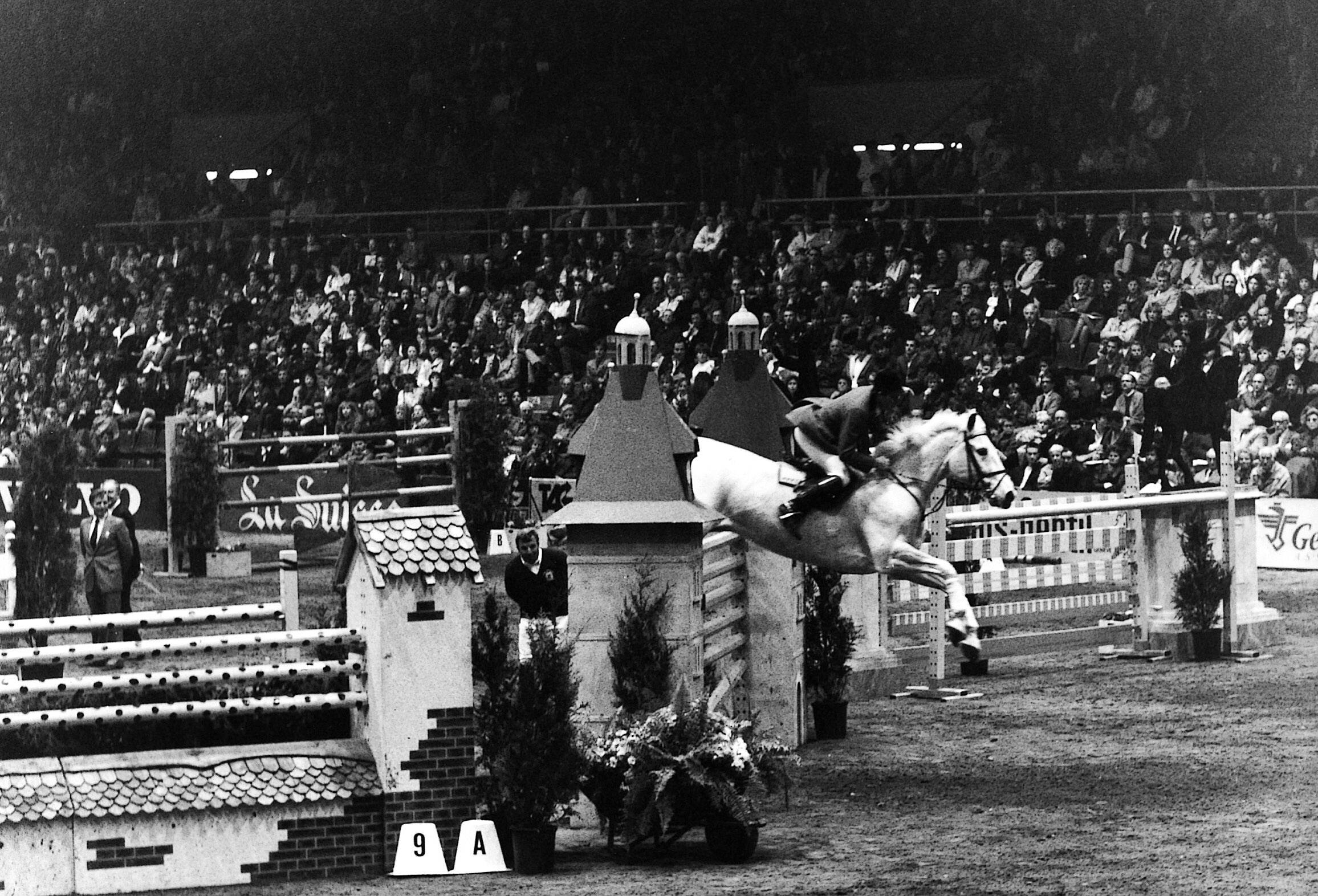
There was no question of bidding farewell to the ice rink without staging a legendary edition, and the sporting gods conspired to make that happen in the spring of 1989. The ongoing duel between John Whitaker’s Milton and Pierre Durand’s Jappeloup, the two legends of the decade, was at its height. In the end, the fabulous grey won the Geneva Grand Prix with a superb performance in the jump-off, which Durand and Jappeloup surprisingly failed to make.
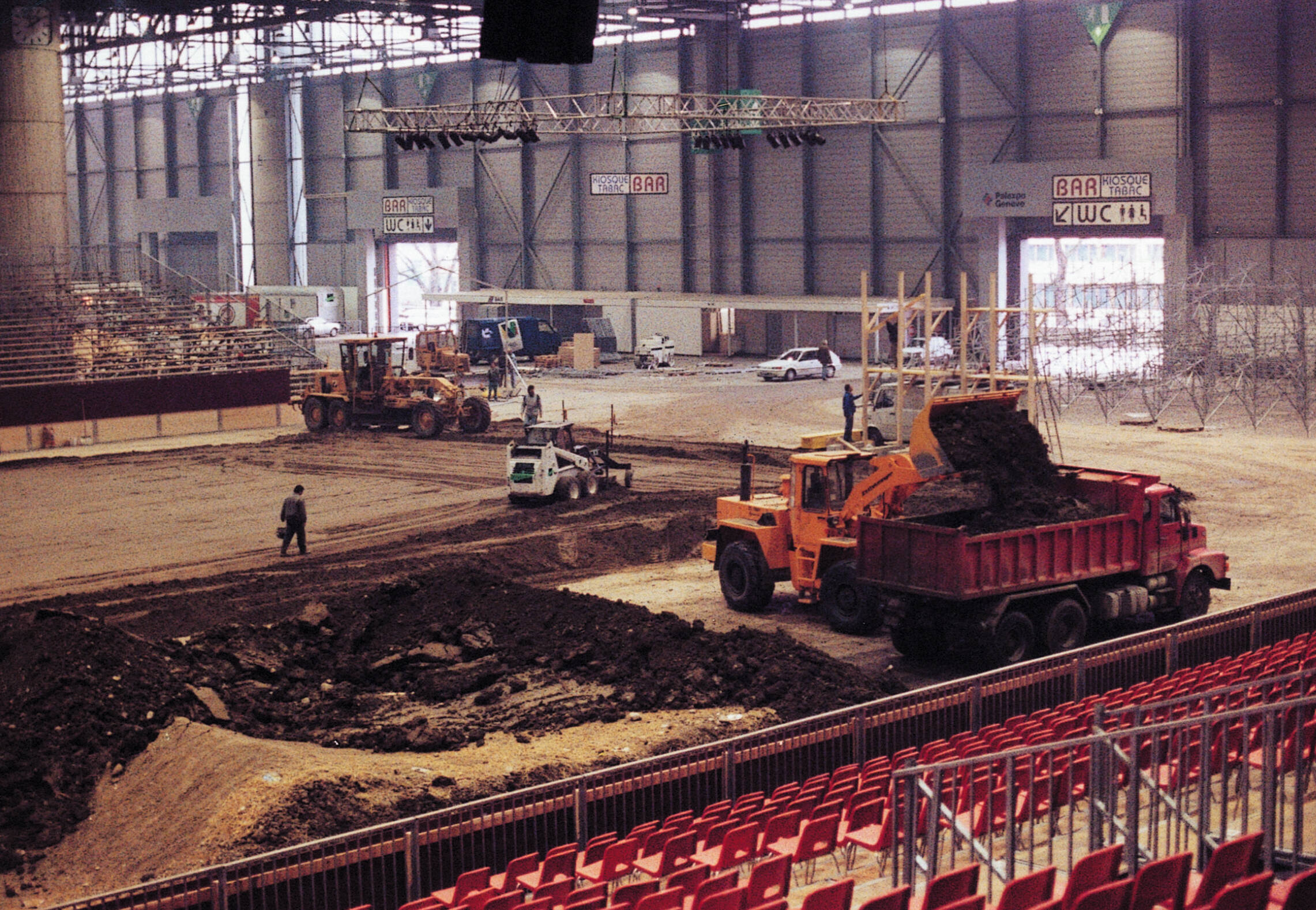
A few months later, in the office of the chair of the CHIG organising committee, Pierre Genecand raised his hand and said he wanted to get to work and find a solution. He called his cousin Didier Genecand and Daniel Perroud, who were both supercross organisers, to suggest they share the cost of erecting their grandstands at Palexpo. The deal was done and the first edition of the new era took place in December 1991, with the CHI Geneva’s mix of sand and turf being laid on top of supercross dirt. It was a fitting way to celebrate the tenth anniversary of the building’s inauguration and the fourth of Hall 5, without which the CHI would have been unable to take up residence at Palexpo.
The hall made for a gigantic arena. Measuring 107 by 52 metres in its first year, which made it the largest indoor jumping arena in the world, it grew a further five metres wide 12 months later. Size was not all it had to offer. It was also conveniently close to the airport, rail station and motorway, making it that little bit easier to ferry the horses in.
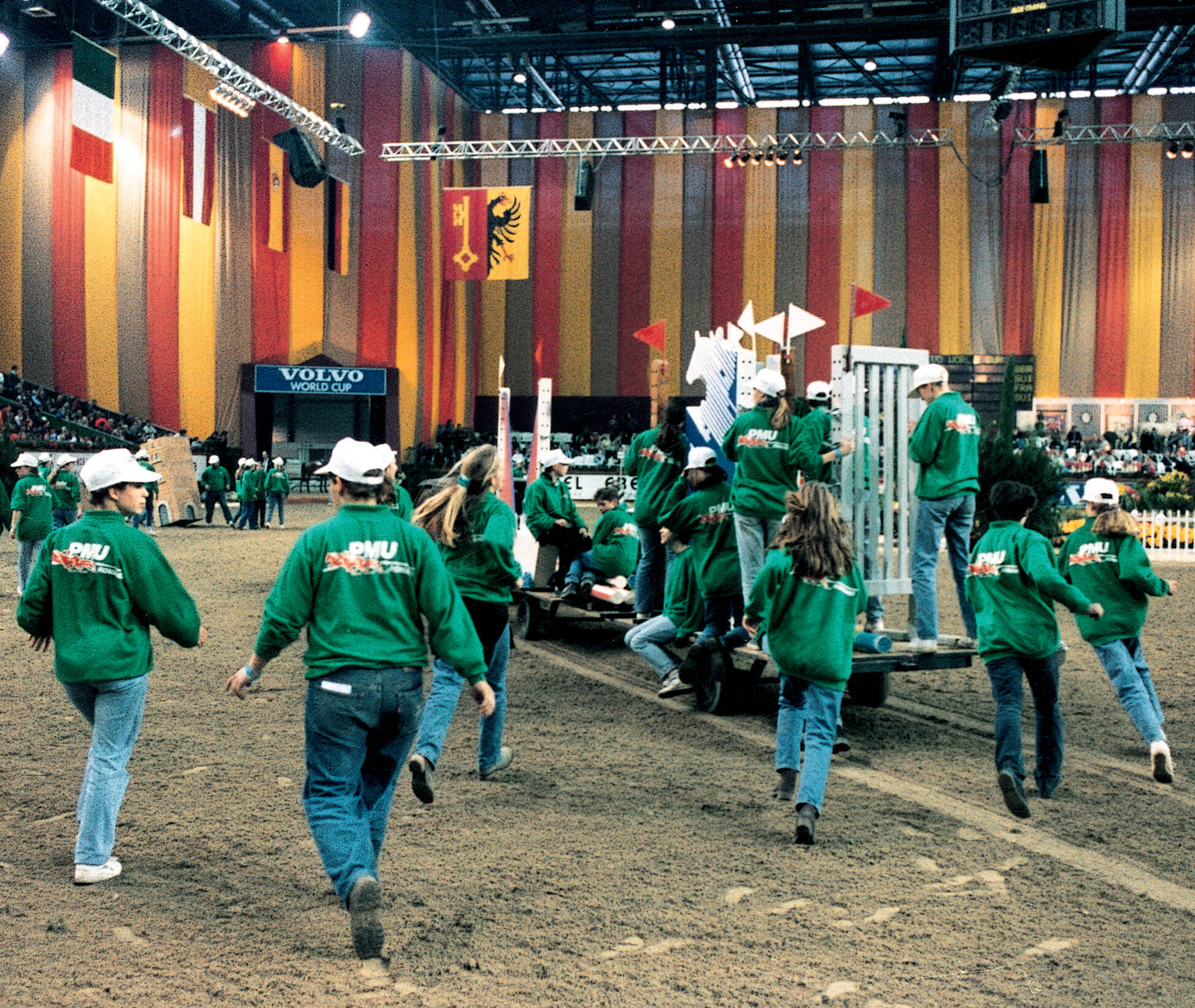
To begin with, however, the stands erected for the supercross event were a little on the large side, though success was not long in coming. In its first year at Palexpo, the CHIG attracted 18,000 spectators and a further 5,000 two years later. Everything was taking shape, as evidenced by the legion of volunteers, which grew in number from 250 at Les Vernets to more than 400 at Palexpo and became the soul of the event.
The 1990s saw sport become a global concern. The English Premier League came into being in 1992, a year in which the Olympic Games in Barcelona enraptured viewers around the world, while Formula 1 was sweeping all before it on TV. Sport was big business, and equestrianism was taking the same path, shedding its military and aristocratic past to become more accessible and more urban.
TV coverage of the CHI Geneva grew following its move to Palexpo, introducing viewers in French-speaking Switzerland to the leading lights of jumping, among them several CHIG devotees and hugely talented champions from a golden generation: brothers Markus and Thomas Fuchs, Willi Melliger, Philippe Guerdat, Lesley McNaught and Stefan Lauber to name but a few of the Swiss contingent, and foreign riders of the calibre of Ludger Beerbaum, Rodrigo Pessoa and Marcus Ehning.
Aurore Favre
- Back
-
Share