

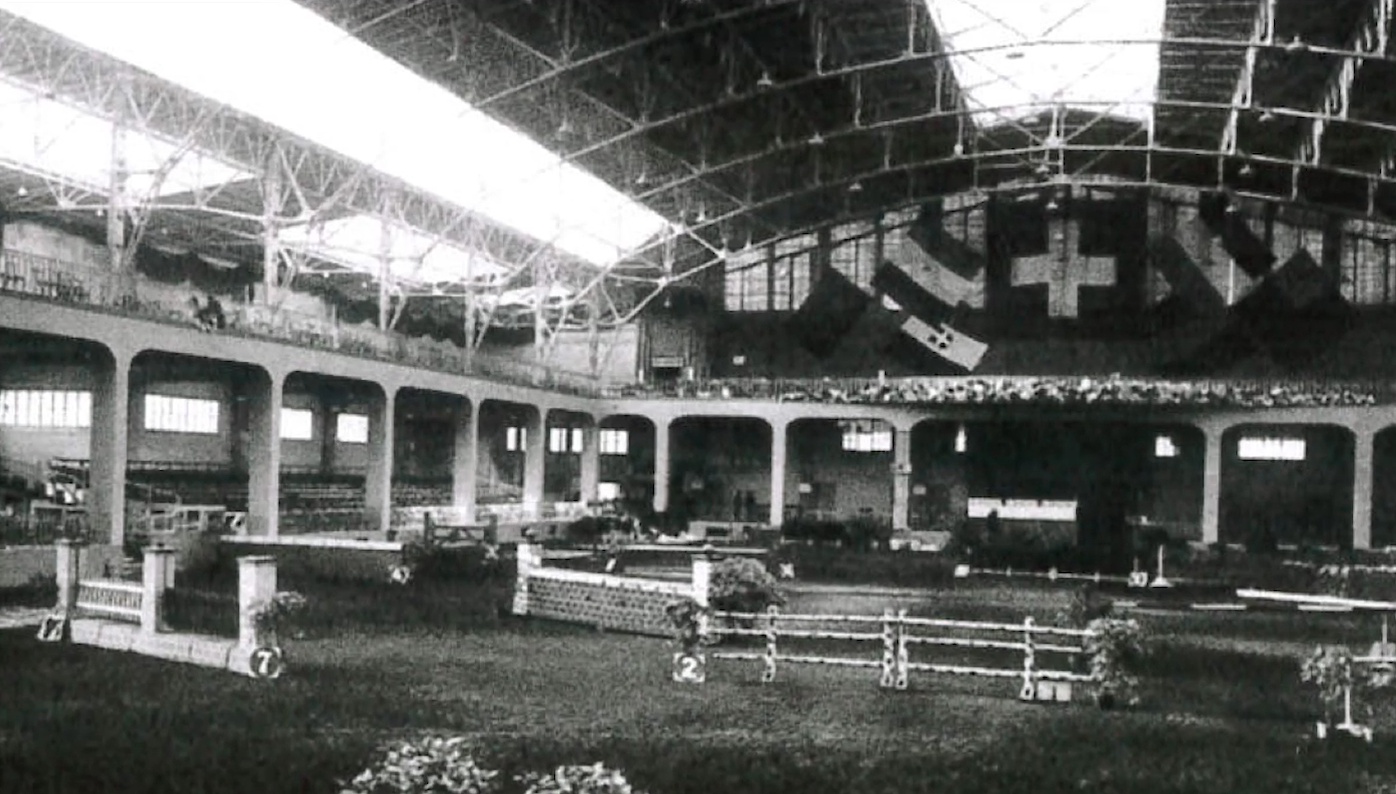
The Palais des Expositions, a temple to Geneva's boldness.
1926 — the birth of a giant
The year 1926 marked a turning point in the history of Swiss equestrian sport with the creation of the first Concours Hippique International de Genève (CHI). This inaugural edition was held in the brand-new Palais des Expositions, in the centre of Geneva, close to the Plaine de Plainpalais. The show brought together 85 riders and 158 horses — a remarkable figure for a first international undertaking.
The Palais des Expositions was a modern building for its time. Built in particular to host the Geneva Motor Show, it embodied the city's ambition to establish itself as a venue open to major international events. From the design stage, a number of riding enthusiasts, led by the Geneva equestrian club L'Étrier, saw in it the opportunity to stage an indoor show comparable to those already held at the Grand Palais in Paris.
A now-famous story has it that Alfred Blanchet, one of the pioneers behind the project, asked the building's developers not to concrete over the entire floor of the main hall. Thanks to that far-sighted decision, it became possible to lay out a genuine sand arena inside the palace.
Organising this first CHI was a real challenge. The economic climate of the day was hardly favourable, and many doubted such a venture could succeed. The organisers, however, showed boldness and conviction. Their ambition was clear: to give Geneva a sporting event capable of attracting Europe's finest riders and of carrying the city's name beyond Swiss borders.
That first edition was such a success that it anchored the show durably in Geneva's sporting landscape. The Palais des Expositions remained its home for many years, becoming the stage for the early days of an event that would gradually earn worldwide renown.
In hindsight, that first edition stands as the starting point of an extraordinary adventure. What was then no more than an ambitious gamble has become one of the most prestigious horse shows in the world. A hundred years on, the CHI de Genève remains faithful to the spirit of its founders: to innovate, to bring together the very best riders, and to thrill the public with a shared passion for the horse.
Vibrations
Geneva in 1926
In 1926, Geneva had just over 130,000 inhabitants and looked very different from the city we know today. Life moved to the rhythm of trams, bicycles, horses and the first motor cars.
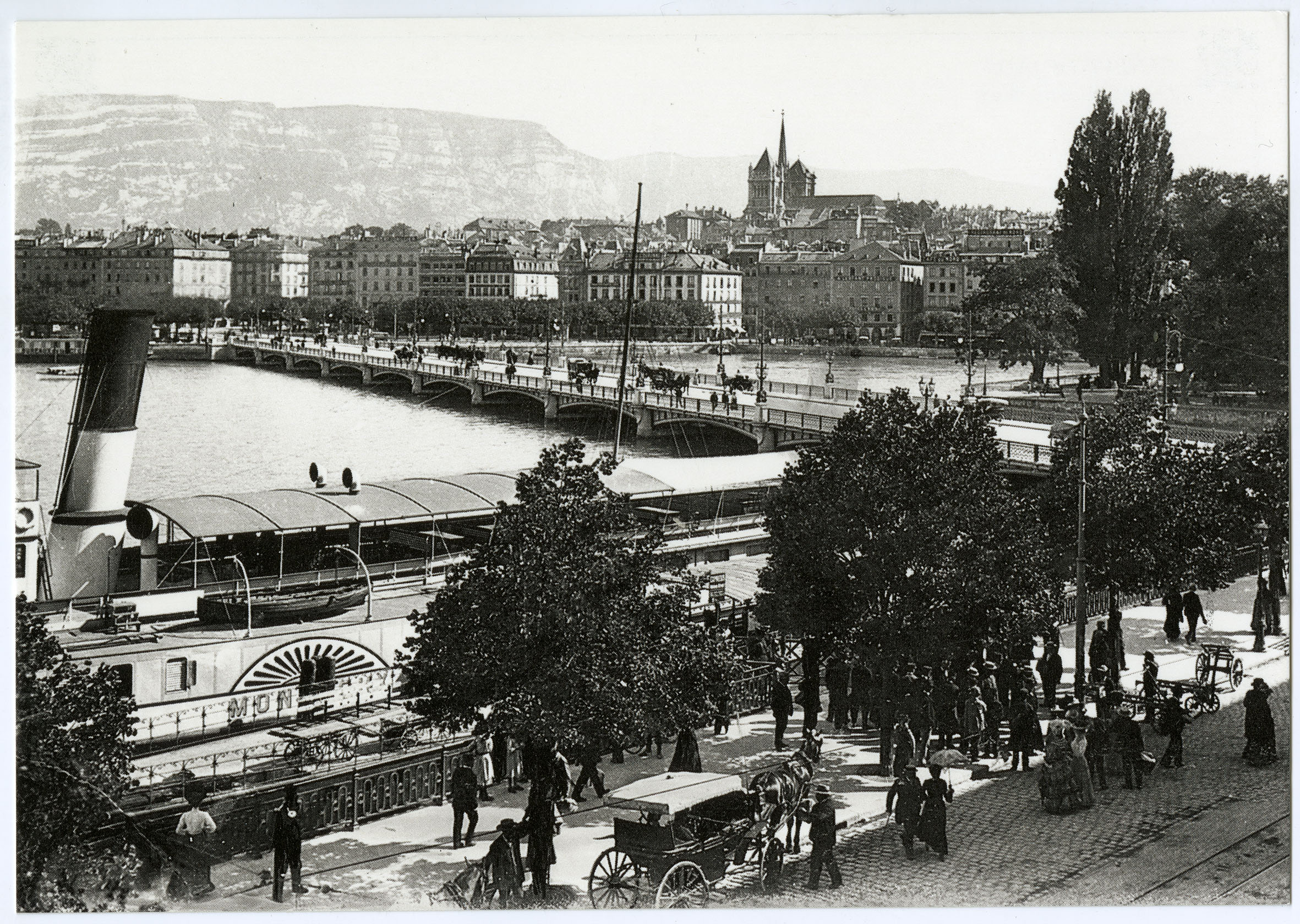
Modern comforts were still limited. Although electricity was spreading steadily, many households lacked the amenities we now take for granted.
Despite these constraints, Geneva was a dynamic city with its eyes on the future. Thanks to the presence of the League of Nations, it welcomed visitors from all over the world and strengthened its international standing.
The arrival of the first Concours Hippique International de Genève was part of that momentum. For residents, it was a unique chance to enjoy a prestigious spectacle in the very heart of their city.
Legends of the arena
Meet the masters who shaped the history of the CHI de Genève through their legendary feats.
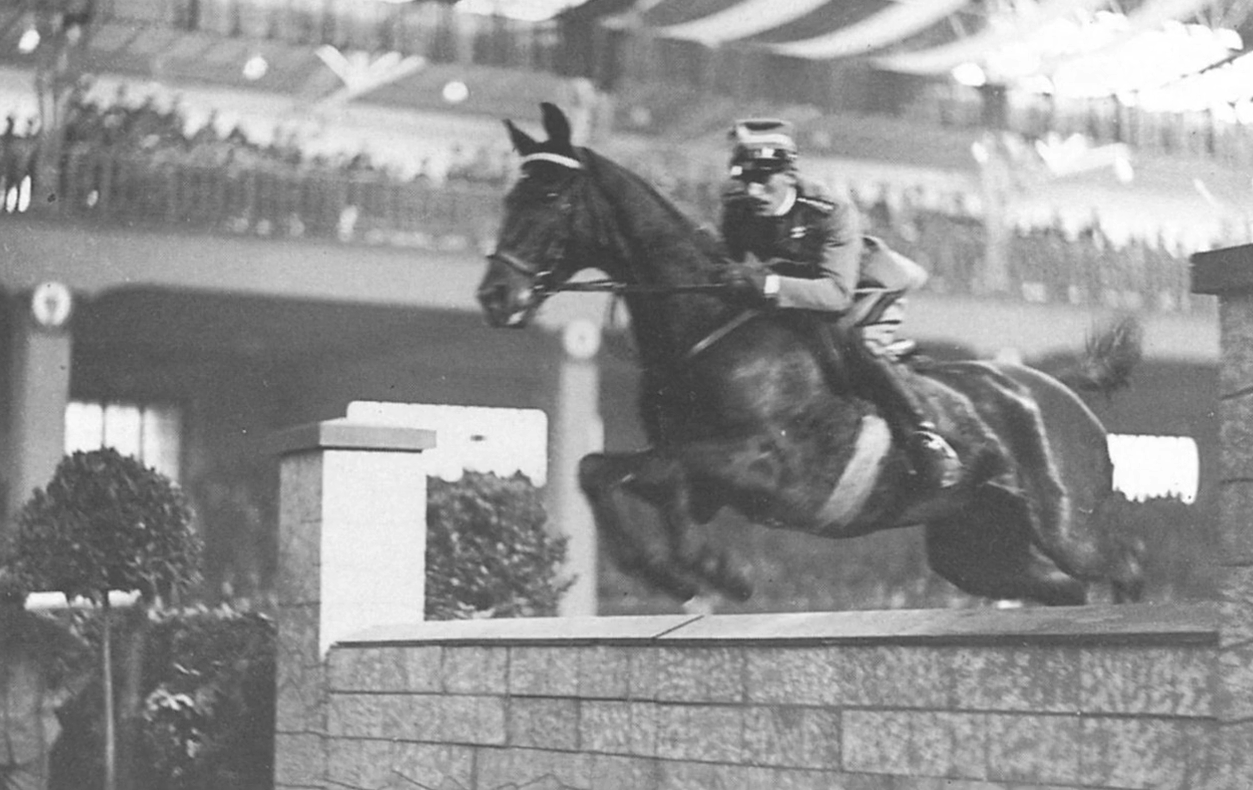
Sandro BETTONI
Italian excellence aboard ScoiattoloAmong the great European riders of the interwar years, Alessandro Bettoni Cazzago established himself as one of the finest show jumping specialists. His horse Scoiattolo ("Squirrel"), wounded in action during the Great War and then saved, went on to become a champion.
At the first edition of the CHI de Genève in 1926, at the Palais des Expositions, Alessandro Bettoni and Scoiattolo won the Grand Prix before several thousand spectators, marking the beginnings of an event destined to become an international benchmark.
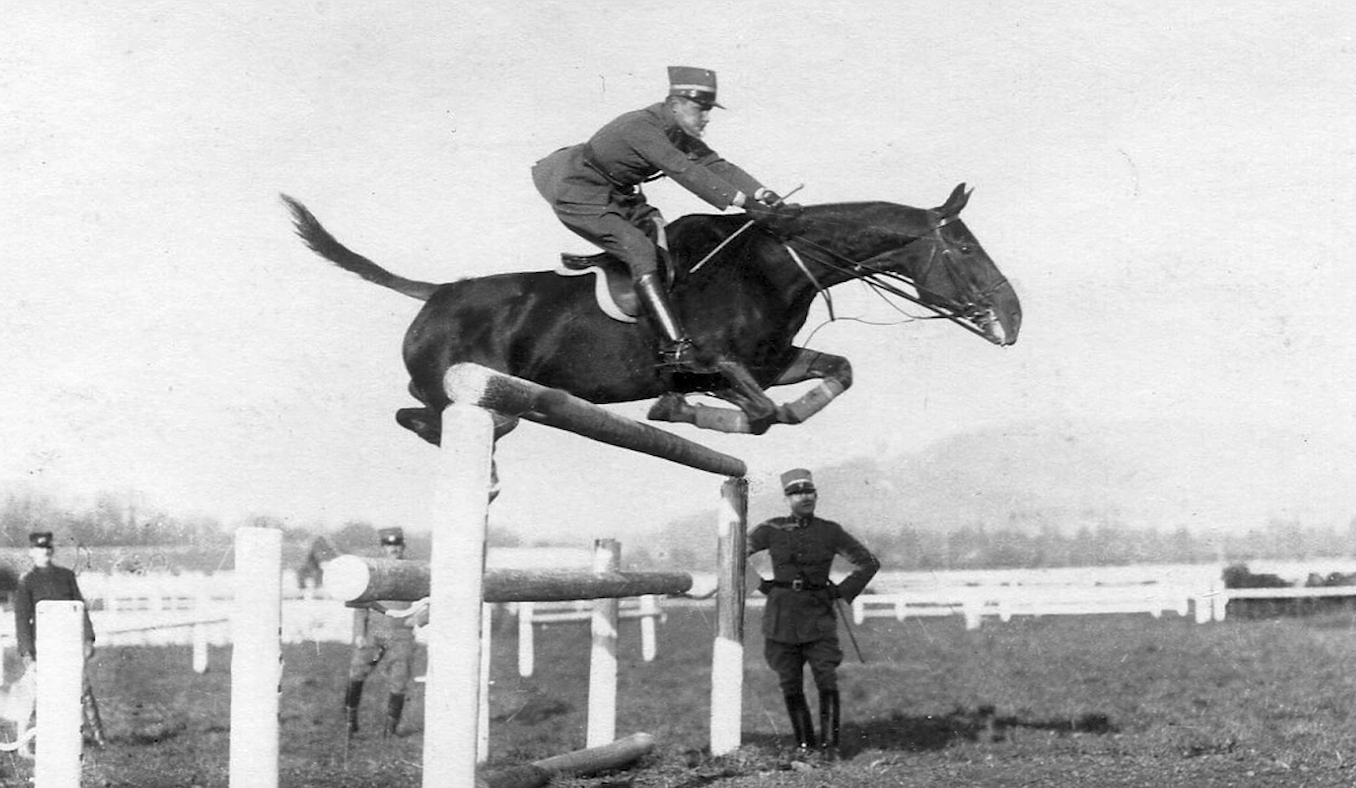
ALPHONSE GEMUSEUS
A Swiss hero with LucetteA military rider from Basel born in 1898, Alphonse Gemuseus became one of Europe's best horsemen in the 1920s with his mare Lucette. In 1927 he won the Parcours de Chasse, the Prix d'Ouverture and the Nations Cup at the CHI de Genève.
- Individual Olympic gold (Paris 1924)
- Team Olympic silver (Paris 1924)
The derby — beyond the jump
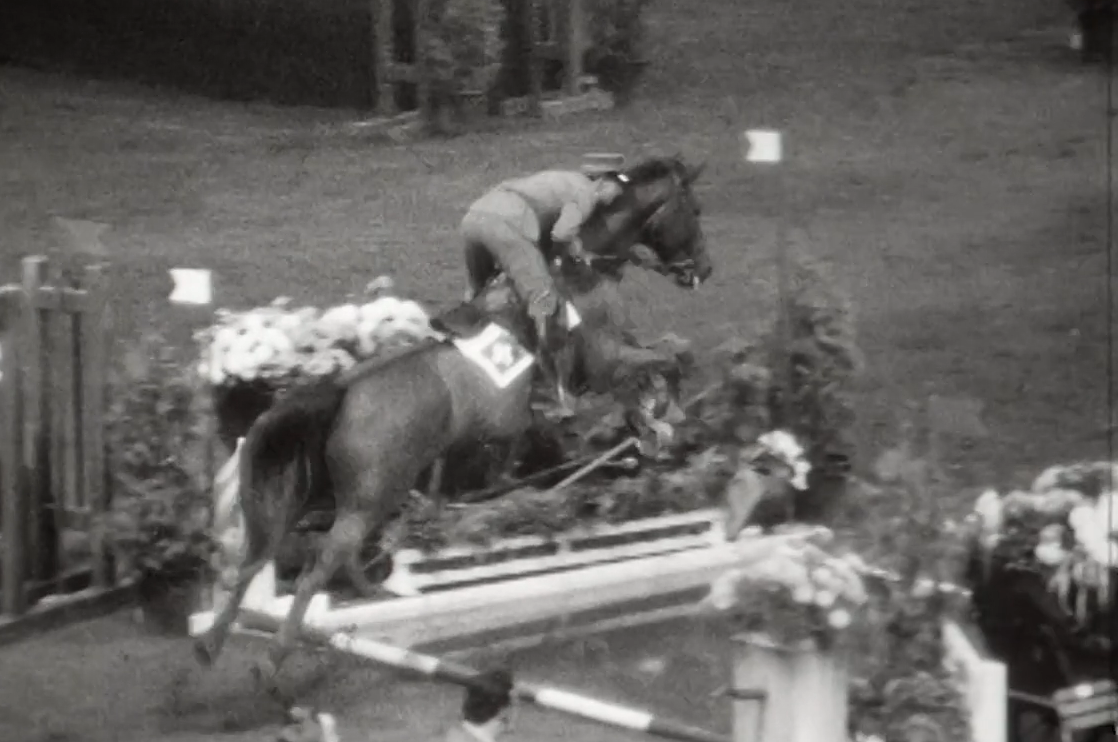
An equestrian derby is a show jumping class rather apart in the riding world. Unlike conventional rounds contested in a standard arena, a derby is run over a far longer track, often outdoors, with natural obstacles and a layout reminiscent of cross-country.
The idea is to offer a livelier, more varied course, where the horse must adapt to changing situations: slightly uneven ground, shifts of pace, long gallops between fences, and technical combinations sometimes drawn from the natural terrain.
Historically, derbies developed as a way of bringing show jumping closer to its military origins, when horses had to cross varied terrain in real conditions.
An interruption marked by the Depression and international tensions
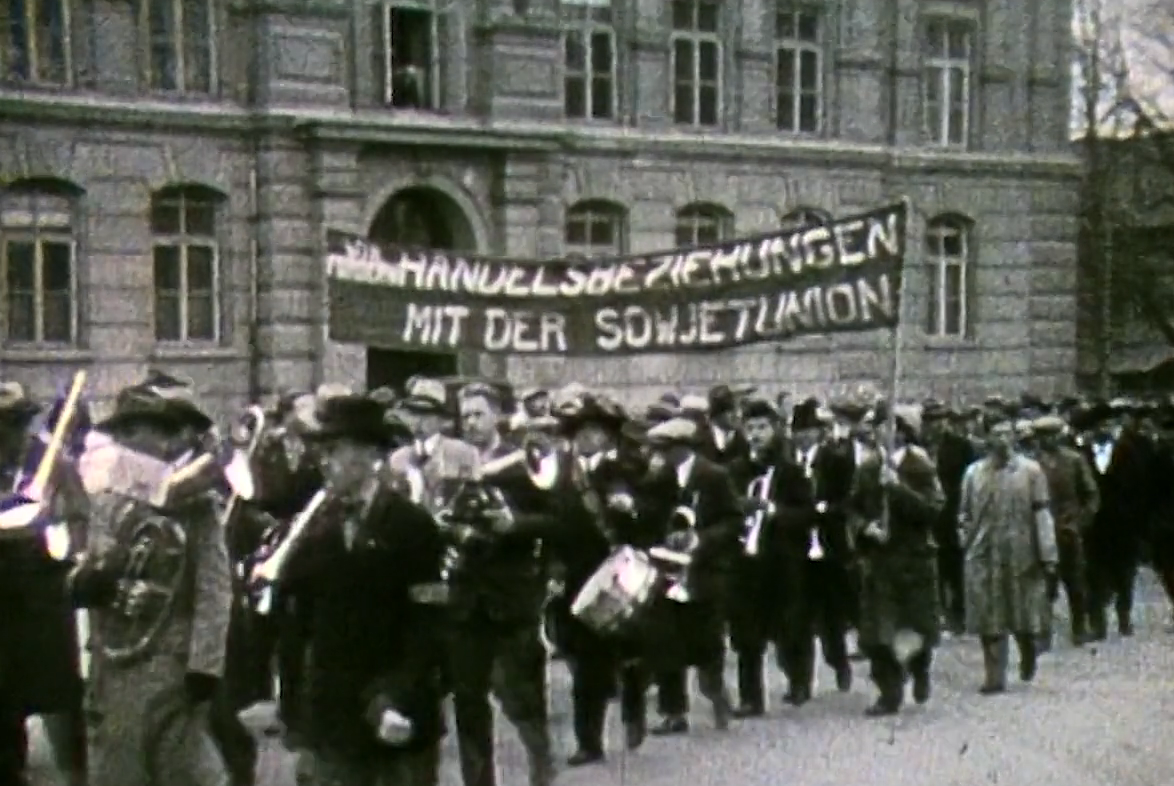
1933 — 1945After a promising start and five consecutive editions of the CHI de Genève, the show's momentum was abruptly checked in the early 1930s. The global economic climate, shaped by the Great Depression of 1929, hit Switzerland as hard as the rest of Europe.
In this uncertain climate, the CHI could no longer be held every year. Only three editions took place during those difficult years: in 1933, 1934 and 1938.
1938 marked the last edition before a long hiatus, as the continent moved towards another world war.
The Cadre Noir de Saumur
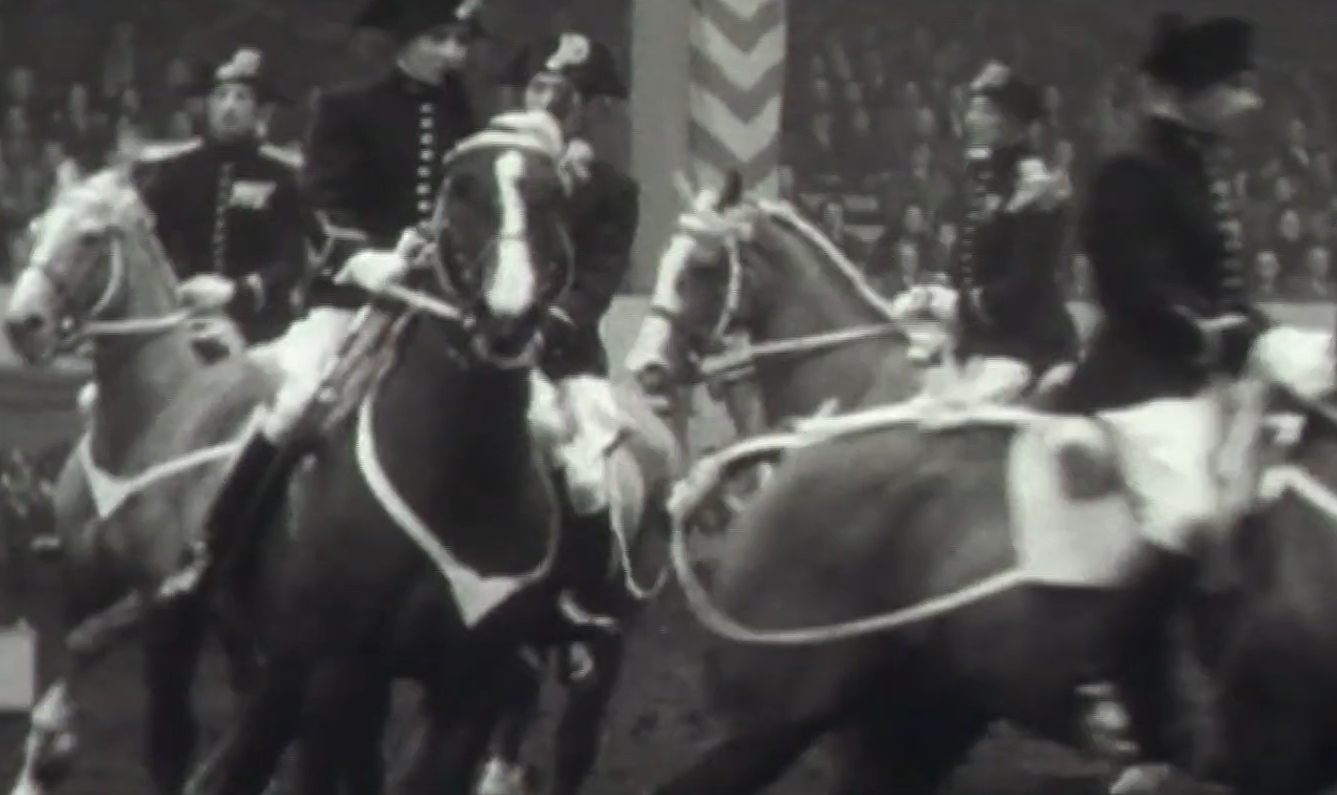
In 1938, the CHI welcomed an exceptional guest: the Cadre Noir de Saumur. This French institution, founded in the 19th century and recognised worldwide, embodies the excellence of military and academic horsemanship.
The presence of the Cadre Noir in Geneva in 1938 gave that edition a particular dimension. Beyond the competition, it was a display of haute école and equestrian craft that drew a wide audience.
In a Europe growing steadily more tense, their appearance also carried a strong symbolic value: that of a cultural and sporting exchange between nations, in a spirit still at peace.
Volunteers
Behind the prestige, the champions and the great victories, the Concours Hippique International de Genève has always rested on an essential yet often invisible force: its volunteers.
Ever since the show's earliest editions, it is they who, behind the scenes, keep everything running. Without them, the CHI simply could not exist in its present form.
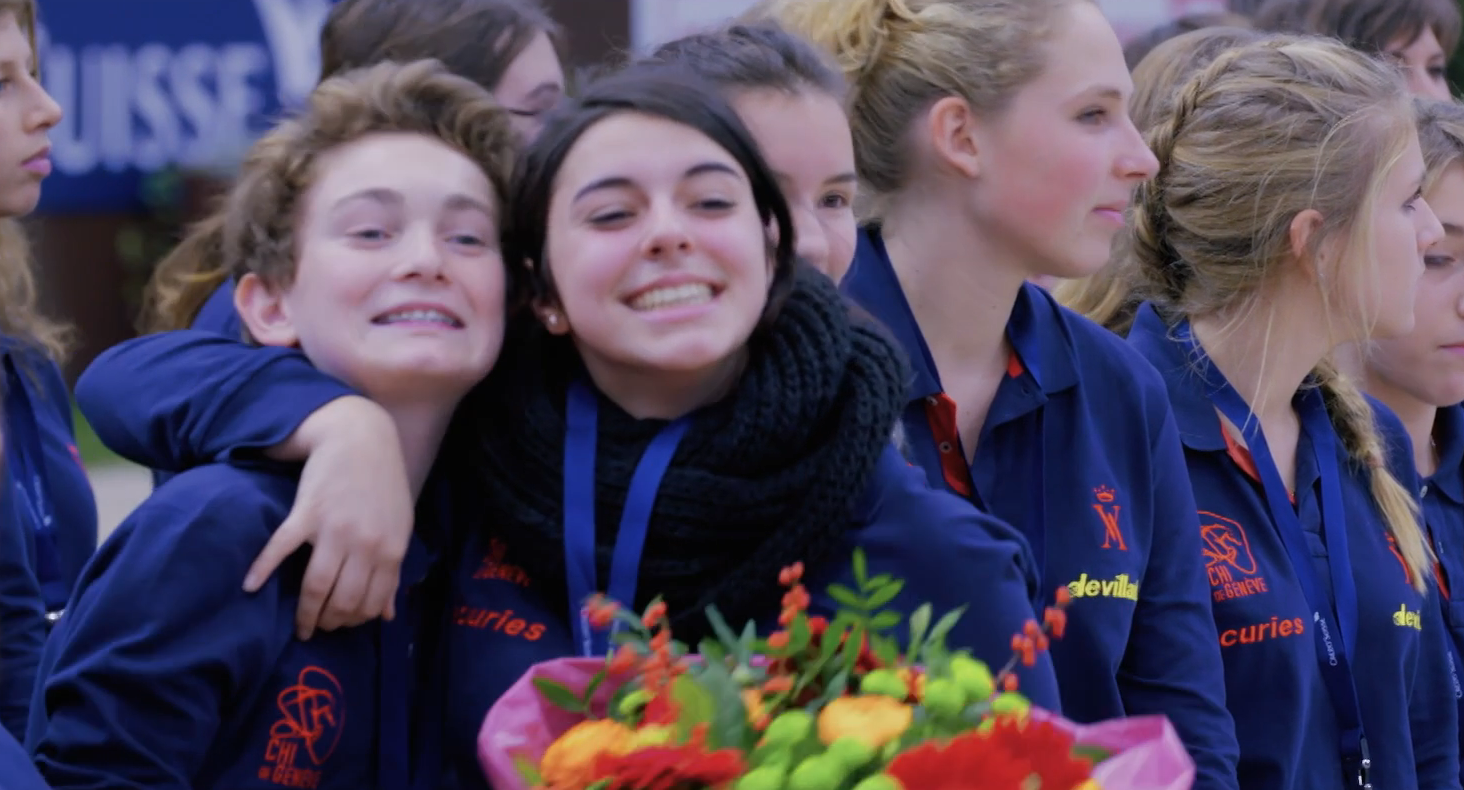
Every year, hundreds of enthusiasts give their time, often discreetly, but always with the same motivation: to bring to life a unique event in the heart of Geneva.
Beyond the practical tasks, the volunteers also embody a spirit: one of passing on, of sharing, and of a deep passion for the horse.
THANK YOU
To the devoted generations.
