

Back to the great hall
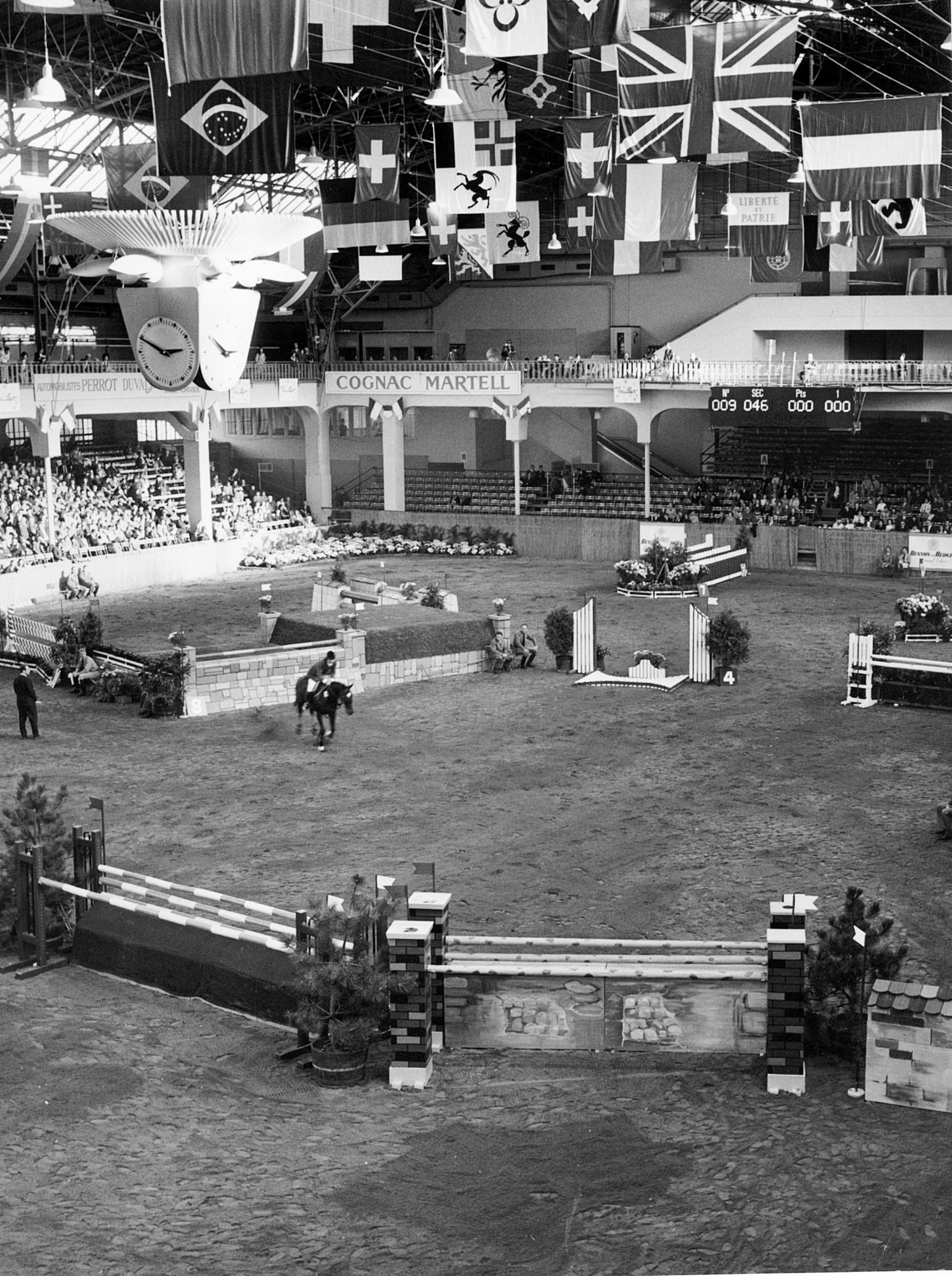
In 1947, the Concours Hippique International de Genève left the grounds of Plainpalais for good to return to its historic home: the great hall of the Palais des Expositions. After several years spent outdoors, imposed by the circumstances of the post-war period, this reinstallation marked a true return to the event's roots. Riders, horses and the public rediscovered the very particular atmosphere of indoor competition, where the elegance of the facilities and the closeness to the action heightened all the intensity of the spectacle.
This return opened one of the longest and most prestigious chapters in the history of the CHI. For nearly forty years, the Palais des Expositions was the unmissable stage for Geneva's greatest equestrian gatherings. Year after year, the world's best riders met there, helping to build the show's international reputation. Between exceptional sporting performances, gala evenings and the fervour of the public, this period durably forged the identity of the CHI and placed Geneva among the world capitals of equestrian sport.
A Nations Cup to share
The Fédération Équestre Internationale then decided that a country could host only one Nations Cup. Lucerne and Geneva would from then on have to share the cake.
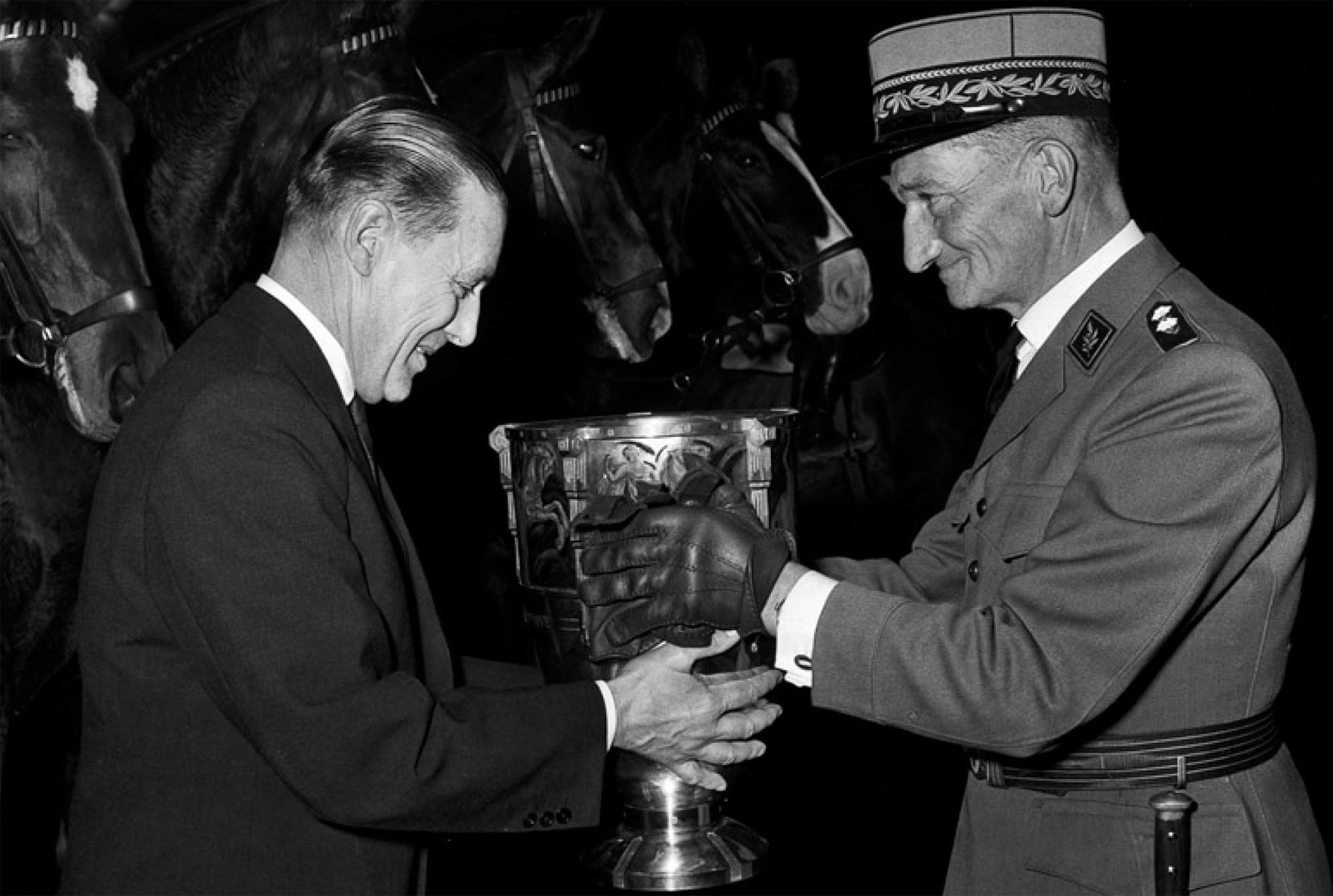
From 1951 onwards, a new arrangement took hold in the Swiss equestrian calendar: one year in Geneva, the next in Lucerne. The two cities now alternated as hosts of the prestigious international show, giving each the time to prepare an ever more ambitious edition. This biennial rhythm also avoided direct competition between the two events and helped strengthen their standing on the European equestrian scene.
For Geneva, this alternation turned the show into a particularly awaited rendezvous. The wait between two editions fuelled the public's enthusiasm, while the best international riders continued to count the city of Calvin among their unmissable stops. Each return of the CHI was experienced as a genuine event, bringing together enthusiasts, families and dignitaries around a first-rate sporting spectacle.
This new cadence also brought a major advantage: it gave the organisers a more solid financial footing and more time to prepare each edition. Resources could be invested in quality facilities, in welcoming riders and horses, and in ever more prestigious attractions. The show thus grew in ambition, quality and influence, laying the foundations for its future development and its status among the greatest international equestrian competitions.
On the bill of the great evenings
Despite a rather tight budget — 166,000 Swiss francs at the time — the organisers managed to offer the public great attractions.
- The Spanish Riding School Vienna · Austria
- The Cadre Noir Saumur · France
- The Royal Guard of Barcelona Barcelona · Spain
From haute école displays to gala carousels, the Palais des Expositions became a stage where sport met the great equestrian spectacle.
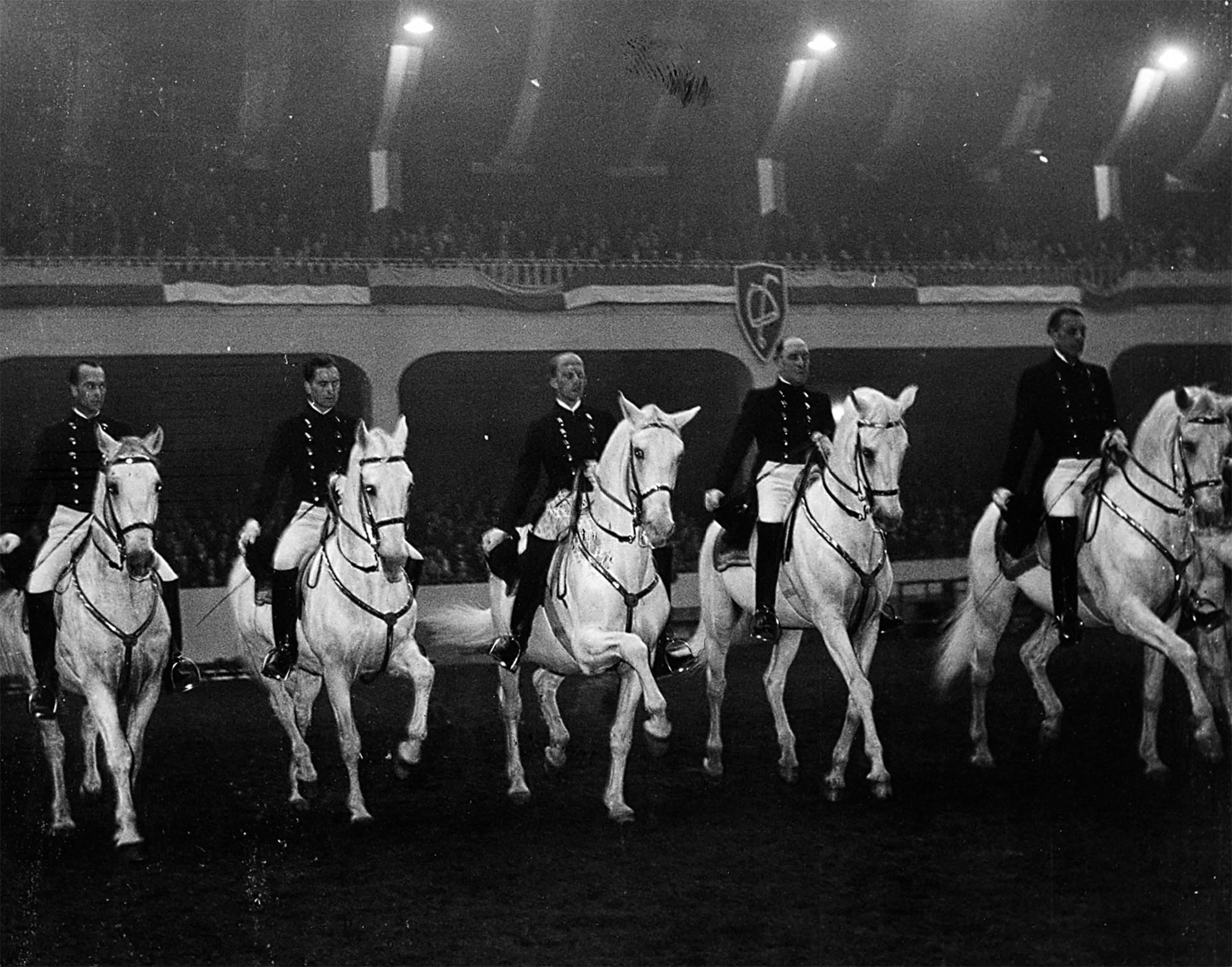
These prestigious riding academies, keepers of centuries-old traditions, played to full houses. For the Geneva public, the show was not merely a competition: it was the elegant rendezvous of the season.
Colonel Pierre de Muralt, the host of Évordes
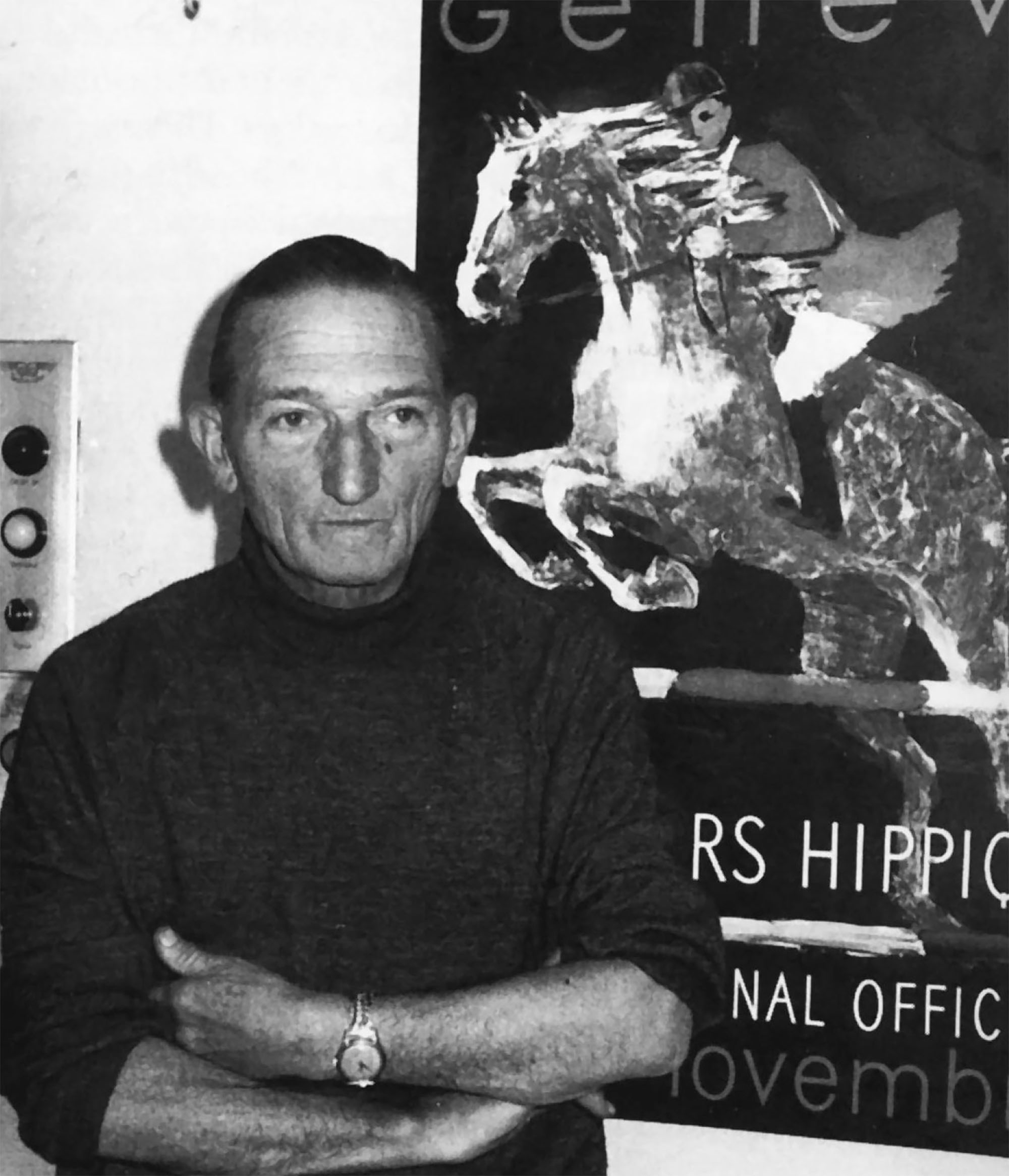
1951 also marked the beginning of the long presidency of Colonel Pierre de Muralt, a former pillar of the Swiss team before becoming its chef d'équipe. Under his leadership, the show cultivated an art of hospitality that made its reputation.
At his Évordes estate, the colonel welcomed all the riders — the d'Inzeos, d'Oriola, Winkler and the other aces of the era — as well as the officials, right up to the end of his presidency. The greatest names in the sport became, for the span of an edition, the darlings of the Geneva public.
We have a record participation in terms of the diversity of nations, with twelve different countries taking part. The most remarkable, most considerable field — apart perhaps from Aachen this year.— Show archives
Stables in the basement
Behind the prestige of the evenings, the backstage of the Palais tells another story — one the riders never forgot.
"We always dreamed of coming to Geneva. Once there, we expected to find fine loose boxes, but the basement stables were dilapidated (horses in standing stalls, separated by partition bails). Fortunately, early in the morning, we could move the horses inside the Palais."
A rider's testimony from the era.
- Three large arenas available to riders and horses
- Completely redesigned stables
- Large 4-by-3-metre boxes
- Showers aplenty
Switzerland prevails at last
It had been awaited since 1927.
Switzerland won the Nations Cup on home soil — a victory thirty-six years in the making.
Another Swiss victory, in the very last Nations Cup ever held indoors in Europe.
The Nations Cup of protest
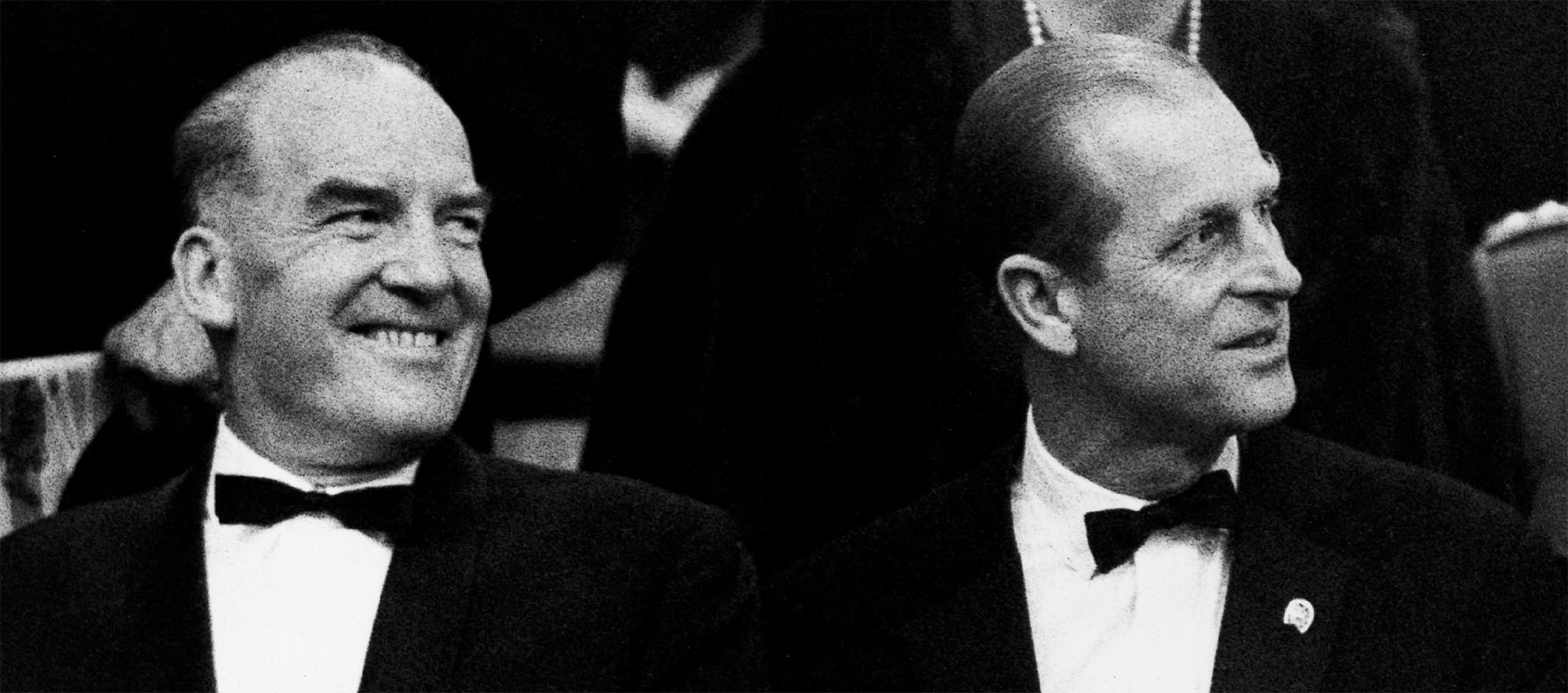
Mention the 1973 Nations Cup in Geneva and one memory immediately comes to mind: that of an edition where sport met history and protest. A few weeks earlier, the federal authorities' decision to disband the Swiss army cavalry had stirred deep emotion throughout the equestrian world. To mark their disagreement, the delegations paraded at the opening ceremony wearing black armbands, while their horses too bore black ribbons. A symbolic gesture, sober yet powerful, which gave this edition a very particular dimension.
The emotion quickly spread to the stands. The Geneva public, deeply attached to equestrian and military traditions, openly voiced its discontent. When the Minister of Defence, Rudolf Gnägi, appeared to present the Nations Cup trophy, he was greeted by a long volley of boos. The atmosphere was so tense that it became impossible for him to carry out the prize-giving himself — an exceptional occurrence in the history of the show.
To calm the situation, the honour of presenting the trophy was finally entrusted to the Duke of Edinburgh, Prince Philip, present in Geneva as guest of honour. Under the astonished gaze of the British prince, the ceremony took on the air of a genuine popular demonstration. This episode, as unprecedented as it was spectacular, went far beyond the sporting arena and remains to this day one of the most striking moments in the history of the CHI de Genève, illustrating how closely the show has always been tied to its era and to the great debates of Swiss society.
Thirty-six years at the Palais
Back to the great hall
Alternating with Lucerne
Switzerland prevails at last
The Nations Cup of protest
Europe’s last indoor Nations Cup
The cavalry may have gone — but the horsewomen were blossoming.
And the sport, now carried by television, was modernising. A new era was dawning for the show — that of the great televised occasions.
